Monday, 25 July 2016

Life as a Medical Student: 12 Things You Really Have to Know

Becoming a medical student can be a daunting prospect; university is a very 

different environment to school, with unique opportunities and challenges.

Being a medical student will involve working harder than you’ve ever worked in your life – but chances are, it’ll also involve having more fun than you’ve ever had before. There are plenty of off-putting myths about being a medical student, but in reality it’s enjoyable, interesting and highly rewarding, especially in light of what you’re working towards. In this article I will describe 12 things about being a medical student that I hope will reassure and excite you about the prospect of studying medicine.

1. You will be able to use what you learn for the rest of your life
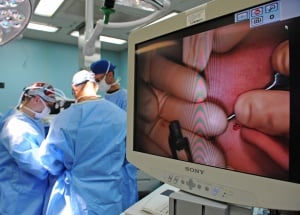
Image shows doctors performing surgery, with a close-up on a monitor in the foreground.
Studying is satisfying when you know the knowledge will be important long after you’ve finished your exams.
This might seem like a fairly trivial point, but it should not be overlooked. The truth for many courses is that you are only really studying in order to pass your exams and once you have managed this the information which you have tried so hard to learn is largely useless to you. This is very much not the case in medicine, with areas of study including anatomy, physiology, biochemistry, pharmacology and pathology all being directly applicable in diagnosing, understanding and treating a disease. Not only is this a great incentive to learn the core course material well, in order that you will be a competent doctor, it is also an incentive to go beyond the basic lecture material and satisfy your curiosity about what you have been taught. As a medic this extra detail could one day be put into practice in a clinical situation and could make a crucial difference to a patient. When you are studying medicine you are not just studying for the next exam but taking the first steps on a course of lifelong learning, building your basis of professional knowledge throughout your medical career.

2. Sometimes it’s hard work

Studying medicine comes with a certain expectation to work harder on average than most other students. There are generally more contact hours than other subjects (this year I have a 9-5 day every Friday) with practicals and lectures taking up a great deal of time. Of course it’s not just the contact hours when you are working: lecture notes need to be read over, essays have to be written, practicals should be prepared for and keeping on top of it all can be a challenge. This is especially the case as your work load will vary from week to week, sometimes being set a great deal of work and sometimes having a whole week with very little to do. Therefore it’s important to be flexible with how you work and appreciate that sometimes you will have to put in a long stint of work in order to have the time off when you need it. There’s also a reasonable amount of pressure on to pass exams. In most subjects other than medicine what you are really studying and aiming for is the best grade possible. Obviously this is true to an extent in medicine, but there is an additional challenge, which is the very high pass marks for the “2nd MB” exams, the ones you have to pass in order to become a doctor. By being passed in these you are essentially being certified as competent enough in a subject area to continue towards a professional medical career. Passing these exams can often require cramming a great deal of knowledge in a small space of time and this can be stressful, but the reward after exams is a long summer to enjoy. Medicine can be challenging, but…

3. It’s not all hard work!
Image shows someone playing the cello; only their hands and the cello are visible.
Medical students learn to manage their time very well, which means you should still have time for your hobbies.
Don’t panic, medicine can be challenging but you’ll still have plenty of time to enjoy being an undergraduate, an experience that many people say is the best time of their life. The level of work in the course is such that you will have time to make the most out of other activities atuniversity, such as sports, music and the huge range of other societies that are on offer at university. All that you need to do in order to manage these other activities is be efficient with the time you spend working; don’t spend a whole afternoon watching YouTube videos if you know you have a music rehearsal that evening. University is about a lot more than simply gaining a degree, you will learn a lot about yourself and other people and hopefully build yourself into someone who is capable of being a good doctor.

4. Being a medical student isn’t all about studying medicine

All these activities that you can do in your spare time aren’t just about having fun, however. While the main reason you do them is to enjoy yourself and take your mind off work they are actually very important in your “personal development”. This is, as mentioned above, working on skills that are outside the scope of academic study but are still vital to being an effective doctor. For example, by taking part in music or theatre you will become accustomed to performing in front of a large crowd of people and as a consequence if you ever have to present at a conference or even to a team of your colleagues, you will be able to stand up with confidence and say what you need to. Equally, playing in a sports team will help you function with other people, some of whom you may have a personality clash with or strongly differ in opinions. You become used to a position of responsibility, with other people relying on you to perform your role, sometimes under pressure. Sports and societies also provide an opportunity to take a leadership and organisational role, which once again will become very important in a clinical context, whether it is organising ward staff or running a practice as a GP. Medicine is a career in which it is vital to emerge from university as a functional person who is capable of interacting well with others. This will not be achieved by sitting in your room every evening and studying the lecture notes: there is an important balance to be struck between working and having a life.

5. Studying anatomy involves more than looking at pictures

Anatomy can be rather full-on, especially at traditional institutions such as Cambridge, where throughout the course of your first year you dissect a “subject” who has decided to donate their body to training medical students. This means getting involved with a scalpel yourself and doing what can occasionally be a rather unpleasant task. Some people might be really excited by the idea of getting stuck in and having a really practical course in anatomy, but for those who don’t you shouldn’t panic. Most other universities use only pre-prepared dissections (prosections), which you will still have to learn the structures of and examine, but without necessarily getting your hands dirty.

6. You will make some of your closest friends studying medicine

Make sure you take the time to make the most of the people you’re at university with. They don’t necessarily have to be medics; many people become very close with people in their sports team or society, but medics do seem to end up hanging around together. Unfortunately this can sometimes lead to slightly geeky “medic chat” where before you know what’s happening you end up discussing what happened in the morning’s lectures, or how you found last week’s practical. This can be a good way to remind yourself what happened in the lecture earlier (no one can concentrate all the way through a full one hour lecture), but sometimes it’s just light-hearted discussion about which lecturer makes it very hard to stay awake!

7. Studying medicine brings you up to date with the latest medical research
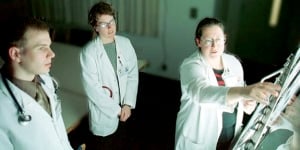
Image shows three scientists in lab coats, one pointing at something posted on the wall.
The chance to be involved in medical research attracts many people to studying medicine.
For those of you who are really interested in the biological sciences, studying medicine is a great opportunity to be brought very close to the frontier of current scientific knowledge, beyond what you will find in textbooks. Your lecturers are all actively involved in their field of interest and as such it is part of their job to stay up to date with all the latest advances and studies that are going on in that area. Therefore they can teach things well before they are published in textbooks and make you aware of very up-to-date and relevant research papers. Be it the latest cell reproduction pathways associated with tumours or the most recently discovered ion channels in the heart, you will be brought up to the current level of understanding.

8. Medicine is a long course

Studying medicine is very much a marathon, not a sprint. It is a 5 or 6 year course, where in your final few years holidays become a lot shorter and you are studying almost all year round (instead of having three months off a year). The reason the course is so long is because of the volume of material that needs to be learned; both the basic scientific principles and the clinical skills needed to apply them must be taught. While this may seem like a fairly monumental task the truth is that while at university time seems to pass incredibly rapidly, probably because the average student is so busy they don’t have time to notice each term flying past. While this is nice as it feels as if you’re making rapid progress through your studies it also means it’s very easy to get behind on work and not catch up until the holidays come around. Fortunately the holidays come around so quickly due to the short length of the terms you can usually get away with this and the holidays are often a valuable opportunity to make sure you understand the past term’s work before the chaos of term time starts again. Some academic staff even go as far as to say…

9. You have a vacation, not a holiday

Image shows huge piles of books.
The amount of studying you’ll need to do may sometimes seem daunting.
What they mean by this is that the Christmas and Easter breaks are simply the times when you vacate your accommodation and not a complete holiday from work. Of course, this does not necessarily have to be true. If you’ve managed your work very well during term time and stayed on top of everything there is no reason why you can’t enjoy a well earned rest for a few weeks. If, however, you prefer to do as many activities as you can while in residence the vacations can be an important opportunity to pay back the time you borrowed during the term. Most importantly, it’s about finding a balance. You don’t want to start the term feeling fatigued from working too hard over the holidays, but equally you don’t want to start the term not having a clue what’s going on.

10. Organisation is key

Studying at university is a real contrast to being a student at school and one of the real challenges is organising your work and activities. You can no longer rely on your parents to keep a calendar of everything that’s going on and instead you must sort things for yourself. Add to this the fact that a significant proportion of time at university will be spent feeling tired, due to excessive studying or partying, and there is a recipe for potential disaster. Tutorials may clash with rehearsals, practicals may coincide with sports matches or a MedSoc event might be happening when you’re meant to be seeing your family. The most important thing is to have some kind of system, whether it is a paper diary you keep with you or a calendar on your phone. Make sure you’re not the one who is always nearly missing things or running round at the last minute trying to work out where you’re supposed to be.

11. If you pass your exams you’ll become a doctor

Image shows someone wearing a lab coat, holding a stethoscope.
Medical students have much less to worry about regarding future employment prospects.
Bar any kind of disaster, if you pass all your exams while studying medicine you will go on to become a doctor. This may well seem like stating the obvious, but it’s worth taking a step back and thinking about this. By passing you in an exam a university is certifying that you are competent enough in that subject area to continue on the path to becoming a doctor. What does this mean for you? First of all it means that it can be quite difficult to pass your exams. In other subjects you are certified as competent by scoring a decent grade (usually a 2:1), however in medicine if you pass you will be guaranteed to continue down the path of clinical school and continue on to a professional medical career. While there is the drawback of having an especially tough time passing exams this is also a very exciting prospect. If you manage to continue at a reasonable level, putting enough work in, you will qualify as a doctor. Compare this with a subject such as law, where if you pass your law degree with a 2:1 you are not guaranteed to become a lawyer; you are not even guaranteed a job. This is also the case with engineering, while you may become a certified engineer it does not mean you have any kind of reassurance that you will go on to have a job in engineering. If things get tough and you think you might struggle to pass just remember that by passing you are taking one step more towards being a doctor.

12. Most of your peers will be very intelligent

Medical students represent an extremely limited selection of people your age and they will tend to be both very capable and hard working. This can sometimes result in you feeling rather demoralised when comparing yourself to other medics, especially as you will tend to notice the ones working harder than you more than the rest. Remember, the people you are comparing yourself to represent the very top fraction of students in the country and as such you should not be disheartened if some of them are better than you. In fact there will be plenty of other medical students at the same level as you who are making the most out of university to develop themselves as a person, not just as a student.
Being a medical student puts you in a very privileged position, among the very top students across the country. It generally seems to be the case that medics follow the mantra “work hard, play hard”. Most importantly, remember that being a student is not only a means to an end, but an end in itself. Make sure you make the most of being an undergraduate!

Sunday, 24 July 2016

Bio Statistics, intellectual property rights and Regulatory affairs

                                                                     1st chapter


                                                       click here for 1st chapter


                                                                2 nd Chapter

                                              click here for second chapter


                                                        For Remaning Chapters


                                               Click Here


                                                             Price One share 

New international study reveals 76% of modern medicine doctors recommended homeopathic medicine for children

  1. 99% Doctors Have Recommended Natural Remedies for Children
  2. 76% of doctors have also recommended homeopathic medicine for a child
  3. Doctors advocated complementary and alternative medicines (CAM) where they associated a lower risk of side effects compared to conventional medications
  4. Doctors involved in the study reported a higher usage of CAM than conventional drugs
KARLSRUHE, Germany : A new international study1 of 582 paediatric physicians published today has found almost all have prescribed or recommended a complementary and alternative medicine2 (CAM) for a child in the last year. 99% of the doctors involved in the study – Usage and attitudes towards homeopathy and natural remedies in general paediatrics: a cross-country overview – had recommended a natural remedy and 76% a homeopathic medicine. Study lead Professor André-Michael Beer, head physician of the Department of Natural Medicine in Blankenstein Hospital, Germany, comments: “Evidence suggests an increased use of natural medicine prescribing in children, but this study shows us, for the first time, the almost universal acceptance of complementary medicine and the factors influencing doctors’ decision making.”
“It is interesting to note that the doctors in the study who use CAM themselves are more likely to recommend it for their patients. They know from personal experience that these medicines help. Often sceptics of homeopathic and natural remedies are those who have never tried these medicines themselves.”
Side effects, when compared to conventional medications, were a key driver for doctors’ decision making; 70% associated homeopathic preparations with a lower risk of side effects and 60% for natural medicines. Dr María Pilar Riveros-Huckstadt, a paediatrician at the Centro de Salud La Cala in Mijas Costa, Spain, adds: “In paediatrics, it is good for doctors to have other options such as homeopathy and natural remedies to recommend for mild ailments such as infant colic and teething that avoid the potential side effects of conventional treatments. These natural remedies are effective and can positively impact the quality of life for young children and their families.”


For which illnesses is CAM recommended?The study showed that in homeopathy a key indication is teething: 37% of doctors stated a frequent use. 53% of doctors frequently advocated natural remedies for upper respiratory tract infections, 45% for infant colic and 33% for sleep disturbances.
81% of paediatric doctors and general practitioners who took part in the study said they feel comfortable discussing CAM with parents and parent values highly influenced doctors. Dr Riveros-Huckstadt explains: “Physicians should feel comfortable discussing the variety of approaches – conventional and natural – so parents can make informed choices to suit the individual needs of the child.”
52% of doctors involved in the study reported recommending CAM for children of parents who prefer natural or homeopathic remedies themselves.
Across all countries, significantly more physicians recommended CAM where parents expressed concerns over conventional drugs. Parents worried about side effects (51%) and efficacy of conventional drugs (39%) influenced doctors’ recommendations
Interestingly one in five doctors (21%) would recommend a natural or homeopathic remedy if the parents had a higher education level.
Recognition of the benefits of homeopathyOver three-quarters of the doctors in the study had recommended a homeopathic medicine for a child. More than half (51%) agreed homeopathy can enhance recovery and symptom relief
The study found that recommendation of homeopathic remedies is driven by doctors’ belief that they are associated with a lower risk of side effects (70%).
http://www.businesswire.com/news/home/20160703005011/en/Study-Reveals-99-Doctors-Recommended-Natural-Remedies

Hold the masters advice for successful results in homoeopathy


It is always a good to be reminded of the truth in homeopathy. Many masters have given us real pearls of wisdom and truth. Hold these close and you will have many more successful cases.
  • We have no long acting drugs; the action is immediate, continued favorable condition depends on the quality of the vital force and it’s harmonious action. (H.A. Roberts)
  • If the symptoms for which a remedy is given are removed and a new symptom appears, with hold the hand if you wish the case to go on to recovery. (Lippe)
  • Susceptibility exists in the vital force, not in the tissues. (J.T.Kent)
  • Ultimately the constitutional peculiarity is bound to reveal itself in a form pointing to it’s remedial counterpart. Nature calls for relief in her own language which it behoves us to learn properly. It is contained in the symptom picture but many times we are forced to look for it elsewhere. (C.M. Boger)
  • On uterine Contractions and Pulsatilla – It will often cause in five minutes a very strong contraction of the uterus, sometimes almost in a painless way. (J.T.Kent)
  • Never leave a remedy until you have tested it in a higher potency if it has benefited the patient. (J.T.Kent)
  • Do not dip into a chronic state when dealing with an acute condition, and vise versa. (H.A. Roberts)
  • Why prescribe for a part of the patient when you have the whole patient with you? The patient was sick before the glands were. (Hayes)
  • Some have been confused by primary and secondary effects of medicine. You need not worry over this. You only need to know that certain symptoms follow each other. Primary and secondary action reverse themselves in different individuals. (J.T.Kent)
  • The constitutional remedy is found by a series of symptoms absolutely new to that patient. (C.T.Boger)
  • There is no better evidence of the good action of remedy than mental improvement. (J.T.Kent)
  • Keep a symptom, don’t follow a remedy. (H.A. Roberts)
  • In a cure, the discharge may not come back at the original place but from some other mucous membrane. (G. Miller)
  • The bond between two miasms can be broken only by a prescription that will meet the totality of the most active one. (J.H. Allen)
  • All maladies which show skin eruptions are always present internally before showing local symptoms externally. (S. Hahnemann)
  • Don’t leave your inter-current remedy too soon, it may be the curative remedy. (F.E. Gladwin)
  • Look for the picture of the chronic following recovery from an acute condition. (H.A. Roberts)
  • If we could accept opinion we should have to go back to Allopathy, because we find there only a record of man’s experiments; a mass of heterogeneous opinions. (J.T. Kent)
  • Man must be studied as he is, as he was, everything of man and of the human race in general, in order to understand disease. (J. T. Kent)
  • Minutes or hours in acute; days, weeks, or months in chronic diseases, never repeat while amelioration holds. (M.L. Tyler)
  • The principle of Homeopathy is applicable to any range of potency. (C.M. Boger)
  • Hahnemann’s central idea is fundamental that the further an outstanding symptom seems removed from the ordinary course of disease, the greater is that symptoms value in determining the remedy. (C.M. Boger)
  • If you love homeopathy, it will love you. Such is natural charity. (J.T. )
  • It is impossible to learn homeopathy except from a master. (G. Miller)
  • The homeopathic principles, when known, are plain, simple, and easily comprehended. They are in harmony with all things known to be true. (J.T. Kent)
  • When you make failures you may be sure that they are within yourself. If you think the failure is in homeopathy you will begin your corrections on the wrong side of the ledger. (J.T. Kent)

Why homeopathy has a bright future in India? Observation by the Director National Institute of Immunohematology

Prof ( Dr ) Kanjaksha GhoshMBBS( Hons ), MD ( Med ), MNAMS ( Path ) , MRCPI, MRCP ( UK ) , FRCPath( Lond ) ,DNB ( Haematology ),FAMS ,FACP ( USA ), FNASc.
Director, National Institute of Immunohaematology (ICMR)
13 th Fl KEM Hospital, Parel, Mumbai -400012. 
You  may rightfully ask “Why should a person who has no official degree in homeopathy should speak about future of homeopathy in India”.  My humble answer to this question will be that due to providence of luck , good fortune and my official position as the Director of one of the leading Institutes of Indian Council of Medical Research.  I have a ring side view of epidemics, degenerative and malignant disorders spreading in this country and how  available medical system is not able to control it.  I am also a witness to rising resentment of patients due to lack of empathy and astronomical cost of management of various disorders through portals of modern medicine.
Bright future ahead
Bright future ahead
I was trained as a physician and hematologist with modern medicine but like many families in West Bengal I continued to study homeopathic medicines at home from my school days.  Hence my study of homeopathy is for far longer period than my study of modern medicine.  I have witnessed many astonishing cures with homeopathic medicines in my own life to convince me that this system of medicine has a bright future in our country.
Though Honingberger brought homeopathy to India, from the beginning of 20th century some of the giants in modern medicine embraced homeopathy.  The name of Dr.Mahendralal Sarkar immediately comes to my mind.  Subsequently many allopathic doctors have embraced homeopathy even at the risk of calling them “Mongrel”.  We should remember Hahnemann himself was an allopath before he discovered the secrets of homeopathy.  His disciples like Herring was also a leading allopathic practitioner  of his time.
You may also legitimately ask me why do I think homeopathy has a bright future  in India?
(i)  The common causes of death due to various diseases in India is still Diarrheal Disorders, upper respiratory infections, malaria  etc.  In all these diseases homeopathy records one of the highest number of cures.  We all remember what happened during cholera epidemic in London and the feat achieved by homeopathic physicians of that country with almost no death in their hands compared to 10-15 % deaths in allopathic hospitals.
(ii)  Some of the disorders like Bronchial Asthma, Rheumatoid Arthritis, Osteoarthritis, allergies have no permanent cure in modern medicine but good to excellent results may be obtained with homeopathic medicine cheaply.
(iii)  We are losing so many patients due to dengue, H1N1, Influenza etc.  As Herring has said in every epidemic a medicine may be found as “Genus Epidemicus”  which will cure majority of these patients during that epidemic.  We need a homeopath with keen eye and sharp understanding of the science for finding a homeopathic medicine for every  “Genus Epidemic us” .
(iv)  In early twentieth century a large number of homeopaths from Bengal proved several local herbs and trees for homeopathic medicine.  Dr.Sarat Chandra Ghose was a leading homeopath of his time who proved several local herbs into homeopathic medicine.  India has thousands of herbs, vegetables, insects which are different from the Western world.  These medicines are waiting to be proved for homeopathic usage.  We need many young homeopaths to come ahead and prove these medicines.
We must ask   ‘Is homeopathy and allopathic medicines are two parallel lines that should never meet? ‘ I don’t think so as advances in modern medicine is bringing into attention many unique actions of drugs where such action could not be explained by existing theories of pharmacology eg. action of various cytokines depends on the context in which the drug is acting!  Does this not resemble mechanism of action of homeopathic medicine?  I am sure these two apparently opposite views will meet. But we need many path breaking researches to achieve that. Please remember ‘Hypothesis of one century becomes the common sense of the next ‘.
A homeopathic physician should learn how allopath treat disease and vice versa.  We are healers and how to heal patients quickly and effectively should be in our minds.  A homeopath should be proud of his profession and should practice with keenness, knowledge and observations so that he/she can contribute towards understanding of this great art.

Medical Ethics for Homeopaths

Homoeopathic Practitioners Professional Conduct, Etiquette and Code of EthicsCentral Council of Homoeopathy. India
Regulations 
In exercise of the powers conferred by clause (l) of section 33 read with section 24 of the Homoeopathy Central Council Act, 1973 (59 of 1973), the Central Council of Homoeopathy, with the previous sanction of the Central Government, hereby makes the following regulations, namely :-
1. These regulations may be called the Homoeopathic Practitioners (Professional Conduct, Etiquette and Code of Ethics) Regulations, 1982.
DECLARATION AND OATH 
2. (a) At the time of registration, each applicant shall submit the following declaration and oath read and signed by him to the Registrar concerned attested by the Registrar himself or by a registered practitioner of Homoeopathy
  • (1) I solemnly pledge myself to consecrate my life to the service of humanity
  • (2) Even under threat, I will not use my medical knowledge contrary to the laws of humanity
  • (3) I will maintain the utmost respect for human life.
  • (4) I will not permit considerations of religion, nationality, race, political beliefs or social standing to intervene between my duty and my patient.
  • (5) I will practise my profession with conscience and dignity in accordance with the principles of Homoeopathy and/or in accordance with the principles of biochemic system of medicine (tissue remedies).
  • (6) The health of my patient shall be my first consideration.
  • (7) I will respect the secrets which are confided to me.
  • (8) I will give to my teachers the respect and gratitude which is their due.
  • (9) I will maintain by all means in my power the honour and noble traditions of medical profession.
  • (10) My colleagues will be my brothers and sisters.
  • (11) I make these promises solemnly, freely and upon my honour.
(b) Hahnemannian Oath 
“On my honour I swear that I shall practise the teachings of Homoeopathy, perform my duty, render justice to my patients and help the sick whosoever comes to me for treatment. May the teachings of master Hahnemann inspire me and may I have the strength for fulfilment of my mission.”
GENERAL PRINCIPLES
3. Character of Medical Practitioner 
The primary object of the medical profession is to render service to humanity with full respect for the dignity of man; financial reward is a subordinate consideration. Whosoever chooses this profession assumes the obligation to conduct himself in accordance with its ideals. A practitioner of Homoeopathy shall be an upright man, instructed in the art of healing. He shall keep himself pure in character and be diligent in caring for the sick. He shall be modest, sober, patient and prompt and do his duty without anxiety, and shall be pious and conduct himself with propriety in his profession and in all the actions of his life.
4. Standards of Character and Morals 
The medical profession expects from its members the highest level of character and morals, and every practitioner of Homoeopathy owes to the profession and to the public alike a duty to attain such a level. It shall be incumbent on a practitioner of Homoeopathy to be temperate in all matters, for the practice of medicine requires unremitting exercise of a clear and vigorous mind.
5. Practitioner’s Responsibility 
A practitioner of Homoeopathy shall merit the confidence of patients entrusted to his care, rendering to each full measure of service and devotion. The honoured ideals of the medical profession imply that the responsibilities of a practitioner of Homoeopathy extend not only to individuals but also to the entire society.
6. Advertising 
(1) Solicitation of patients directly or indirectly by a practitioner of Homoeopathy either personally or by advertisement in the newspapers, by placards or by the distribution of circular cards or handbills is unethical. A practitioner of Homoeopathy shall not make use of, or permit others to make use of, him or his name as a subject of any form or manner of advertising or publicity through lay channels which shall be of such a character as to invite attention to him or to his professional position or skill or as would ordinarily result in his self-aggrandisement provided that a practitioner of Homoeopathy is permitted formal announcement in press about the following matters, namely :
  • (i) the starting of his practice;
  • (ii) change of the type of practice;
  • (iii) change of address;
  • (iv) temporary absence from duty;
  • (v) resumption of practice;
  • (vi) succeeding to another’s practice.
(2) He shall further not advertise himself directly or indirectly through price lists or publicity materials of manufacturing firms or traders with whom he may be connected in any capacity, nor shall he publish cases, operations or letters of thanks from patients in non-professional newspapers or journals provided it shall be permissible for him to publish his name in connection with a prospectus or a director’s or a technical expert’s report.
7. Payment of Professional Service 
(1) A practitioner of Homoeopathy engaged in the practice of medicine shall limit the sources of his income to fees received from professional activities for services rendered to the patient. Remuneration received for such services shall be in the form and amount specifically announced to the patient at the time the service is rendered; in all other cases he shall deem it a point of honour to adhere to the compensation for professional services prevailing in the community in which he practices.
(2) Fees are reducible at the discretion of the practitioner of Homoeopathy and he shall always recognise poverty as presenting valid claims for gratuitous services.
(3) It shall be unethical to enter into a contract of “no cure no payment”
8. Rebates and Commission 
A practitioner of Homoeopathy shall not give, solicit or receive, nor shall he offer to give, solicit or receive, any gift, gratuity, commission or bonus in consideration for the referring, recommending or procuring of any patient for medical, surgical or other treatment nor shall he receive any commission or other benefit from a professional colleague, trader of appliances, dentist or an occulist.
DUTIES OF HOMOEOPATHIC PRACTITIONERS TO THEIR PATIENTS
9. Obligations to the Sick 
Though a practitioner of Homoeopathy is not bound to treat each and every one asking for his services except in emergencies, he shall, for the sake of humanity and the noble traditions of the profession, not only be ever ready to respond to the calls of the sick and the injured, but shall be mindful of the high character of his mission and the responsibility he incurs in the discharge of his professional duties.
10. Practitioner’s Responsibility
(1) A practitioner of Homoeopathy is free to choose whom he will serve provided be shall respond to any request for his assistance in an emergency or whenever temperate public opinion expects the service.
(2) Once having undertaken a case, a practitioner of Homoeopathy shall not neglect the patient nor shall he withdraw from the case without giving notice to the patient, his relatives or his responsible friends sufficiently long in advance of his withdrawal to allow them time to secure another practitioner.
11. Termination of Service 
(a) The following shall be valid reasons for his withdrawal :
  • (1) where he finds another practitioner in attendance;
  • (2) where remedies other than those prescribed by him are being used;
  • (3) where his remedies and instructions are refused;
  • (4) where he is convinced that illness is an imposture and that he is being made a party to a false pretence;
  • (5) where the patient persists in the use of opium, alcohol, chloral or similar intoxicating drugs against medical advice;
  • (6) where complete information concerning the facts and circumstances of the case are not supplied by the patient or his relatives.
(b) The discovery that the malady is incurable is no excuse to discontinue attendance so long as the patient desired his services.
12. Acts of Negligence 
(1) No practitioner of Homoeopathy shall wilfully commit an act of negligence that may deprive his patient of necessary medical care.
(2) A practitioner of Homoeopathy is expected to render that diligence and skill in services as would be expected of another pracitioner of Homoeopathy with similar qualifications, experience and attainments.
(3) His acts of commission or omission shall not be judged by any non-homoeopathic standards of professional service expected of him but by those standards as are expected from a Homoeopath of his training, standing and experience.
(4) A practitioner of Homoeopathy shall use any drug prepared according to Homoeopathic principles and adopt other necessary measures as required.
13. Behaviour towards Patients 
The demeanour of a practitioner of Homoeopathy towards his patients shall always be courteous, sympathetic, friendly and helpful. Every patient shall be treated with attention and consideration.
14. Visits 
A practitioner of Homoeopathy shall endeavour to add to the comfort of the sick by making his visits at the hour indicated to the patients.
15. Prognosis 
(1) The practitioner of Homoeopathy shall neither exaggerate nor minimize the gravity of a patient’s condition. He shall ensure that the patient, his relatives or responsible friends have such knowledge of the patient’s condition as will serve the best interest of the patient and his family.
(2) In cases of dangerous manifestations, he shall not fail to give timely notice to the family or friends of the patient and also to the patient when necessary.
16. Patience, Delicacy & Secrecy 
Patience and delicacy shall characterize the attitude of a practitioner of Homoeopathy. Confidences concerning individual or domestic life entrusted by patients to a practitioner and defects in the disposition or character of patients observed during the medical attendance shall not be revealed by him, to anyone unless their revelation is required by the laws of the State.
DUTIES OF PRACTITIONERS TO THE PROFESSION 
17. Upholding honour of Profession 
A practitioner of Homoeopathy shall, at all times, uphold the dignity and honour of this profession.
18. Membership of Medical Society 
For the advancement of his profession a practitioner of Homoeopathy may affiliate himself with Medical Societies and contribute his time, energy and means to their progress so that they may better represent and promote the ideals of the profession.
19. Exposure of Unethical Conduct
A practitioner of Homoeopathy shall expose, without fear or favour, the incompetent, corrupt, dishonest or unethical conduct on the part of any member of the profession.
20. Association with Unregistered Persons
A practitioner of Homoeopathy shall not associate himself professionally with any body or society of unregistered practitioners of Homoeopathy.
21. Appointment of Substitutes
Whenever a practitioner of Homoeopathy requests another to attend to his patients during his temporary absence from practice, professional courtesy requires the acceptance of such appointment by the latter, if it is consistent with his other duties. ‘The practitioner of Homoeopathy acting under such an appointment shall give the utmost consideration to the interests and reputation of the absent practitioner. He shall not charge either the patient or the absent practitioner of Homoeopathy for his services, except in the case of a special arrangement between them. All such patients shall be restored to the care of the absent practitioner of Homoeopathy upon his return.
22. Charges for service to Practitioners of Homoeopathy
(1) There is no rule that a practitioner of Homoeopathy shall not charge another practitioner of Homoeopathy for his services, but a practitioner of Homoeopathy shall consider it a pleasure and privilege to render gratuitous service to his professional brother and his dependents, if they are in his vicinity or to a medical student.
(2) There is no rule that a practitioner of Homoeopathy shall not charge another practitioner of Homoeopathy for his services, but a practitioner of Homoeopathy shall consider it a pleasure and privilege to render gratuitous service to his professional brother and his dependents, if they are in his vicinity or to a medical student.
23. (1) The practitioner of Homoeopathy called in an emergency to visit a patient under the care of another practitioner of Homoeopathy shall, when the emergency is over, retire in favour of the latter; but he shall be entitled to charge the patient for his services.
(2) When a practitioner of Homoeopathy is consulted at his own residence, it is not necessary for him to enquire of the patient if he is under the care of another practitioner of Homoeopathy.
(3) When a consulting practitioner of Homoeopathy sees a patient at the request of another practitioner of Homoeopathy, it shall be his duty to write a letter stating his opinion of the case with the mode of treatment he thinks is required to be adopted.
24. Engagement for an Obstetrics Case
(1) If a practitioner of Homoeopathy is engaged to attend to a woman during her confinement, he shall do so. Refusal to do so on an excuse of any other engagement shall not be considered ethical except when he is already engaged on a similar or other serious case.
(2) When a practitioner of Homoeopathy who has been engaged to attend on an obstetrics case is absent and another is sent for and delivery is accomplished, the acting practitioner of Homoeopathy shall be entitled to his professional fees; provided he shall secure the patient’s consent to withdraw on the arrival of the practitioner of Homoeopathy already engaged.
25. When it becomes the duty of a practitioner of Homoeopathy occupying an official position to see and report upon an illness or injury, he shall communicate to the practitioner of Homoeopathy in attendance so as to give him an option of being present. The medical officer shall avoid remarks upon the diagnosis or the treatment that has been adopted.
DUTIES OF PRACTITIONERS IN CONSULTATION 
26. Consultation shall be EncouragedIn cases of serious illness, especially in doubtful or difficult conditions the practitioner of Homoeopathy shall request consultation. He shall also do so in perplexing illness, in therapeutic abortions, in the treatment of a woman who had procured criminal abortion, in suspected cases of poisoning, or when desired by the patient or his representative.
27. Punctuality in Consultation
Utmost punctuality shall be observed by a practitioner of Homoeopathy in meeting for consultation. If the consultant practitioner of Homoeopathy does not arrive within a reasonable time such as a quarter of an hour after the appointed time, the first practitioner of Homoeopathy shall be at liberty to see the patient alone provided he shall leave his conclusion in writing in a closed envelope.
28. Patient referred to another Physician
When a patient is referred to another practitioner of Homoeopathy by the attending practitioner of Homoeopathy, a statement of the case shall be given to the latter practitioner of Homoeopathy. The latter practitioner of Homoeopathy shall communicate his opinion in writing in a closed cover direct to the attending practitioner of Homoeopathy.
29. Consultation for Patient’s Benefit
In every consultation, the benefit to the patient shall be of first importance. All practitioners of Homoeopathy interested in the case shall be candid with a member of the patient’s family or responsible friends.
30. Conduct in Consultation
(1) In consultations, there shall be no place for insincerity, rivalry or envy. All due respect shall be shown to the practitioner of Homoeopathy in charge of case and no statement or remarks shall be made which would impair the confidence reposed in him by the patient. For this purpose, no discussion shall be carried on in the presence of the patient or his representatives.
(2) All statements of the case to the patient or his representatives shall take place in the presence of all the practitioners consulting, except as otherwise agreed; the announcement of the opinion to the patient or his relations or friends shall rest with the attending practitioner of Homoeopathy.
(3) Differences of opinion shall not be divulged unnecessarily; provided when there is an irreconcilable difference of opinion, the circumstances shall be frankly and impartially explained to the patient or his friends.
(4) It shall be open to them to seek further advice if they so desire.
31. Cessation of Consultation 
Attendance of the consulting practitioner of Homoeopathy shall cease when the consultation is concluded, unless another appointment is arranged by the attending practitioner of Homoeopathy.
32. Treatment after Consultation 
(1) No decision shall restrain the attending practitioner of Homoeopathy from making such subsequent variations in the treatment as any unexpected change may require; provided at the next consultation, reasons for variation are stated.
(2) The same privilege, with its obligations, belongs to the consultant when sent for in an emergency during the absence of the attending practitioner of Homoeopathy. The attending practitioner of Homoeopathy may prescribe at any time for the patient, but the consultant, only in case of emergency.
33. Consultant not to take Charge of the Case
(1) When a practitioner of Romoeopathy has been called as a Consultant 10 none but the rarest and most exceptional circumstances shall justify the consultant taking charge of the case.
(2) He must not do so merely on the solicitation of the patient or his friends.
34. Bar against Consulting Non-registered Practitioner
No practitioner of Homeopathy shall have consultation with any practitioner of Homoeopathy who is not registered.
DUTIES OF PRACTITIONERS TO THE PUBLIC 
35. Practitioners as Citizens 
Practitioners of Homoeopathy as good citizens, possessed of special training, shall advise concerning the health of the community wherein they dwell. They shall play their part in enforcing the laws of the community and in sustaining the institutions that advance the interest of humanity. They shall cooperate with the authorities in the observance and enforcement of sanitary laws and regulations and shall observe the provisions of all laws relating to Drugs, Poisons and Pharmacy made for the protection and promotion of public health.
36. Public Health 
Practitioners of Homoeopathy engaged in public health work, shall enlighten the public concerning quarantine regulations and measures for the prevention of epidemic and communicable diseases. At all times the practitioners shall notify the constituted public health authorities of every case of communicable disease under their care, in accordance with the laws, rules and regulations of the health authorities. When an epidemic prevails, the practitioner of Homoeopathy shall continue his labours without regard to the risk to his own health.
37. Dispensing
A practitioner of Homoeopathy has a right to prepare and dispense his own prescription.
PROFESSIONAL MISCONDUCT
38. The following actions shall constitute professional misconduct
  • (1) Committing adultery or improper conduct with a patient, or maintaining an improper association with a patient;
  • (2) Conviction by a Court of Law for offences involving moral turpitude;
  • (3) Signing of or giving by any practitioner of Homoeopathy under his name and authority any certificate, report or document of kindred character which is untrue, misleading or improper;
  • (4) Contravention of the provisions of laws relating to Drugs and regulations made there under;
  • (5) Selling a drug or poison regulated by law to the public or his patients save as provided by that law.
  • (6) Performing or enabling an unqualified person to perform an abortion or any illegal operation for which there is no medical, surgical or psychological indication;
  • (7) Issue of certificates in Homoeopathy to unqualified or non-medical persons provided that this shall not apply so as to restrict the proper training and instruction of legitimate employees of doctors, midwives, dispensers, surgical attendants or skilled mechanical and technical assistants under the personal supervision of practitioners of Homoeopathy.
  • (8) Affixing a signboard on a chemist’s shop or in places where the practitioner of Homoeopathy does not reside or work;
  • (9) Disclosing the secrets of a patient that have been learnt in the exercise of profession, except in a Court of law under orders of the presiding judge.
  • (10) Publishing photographs or case-reports of patients in any medical or other journal in a manner by which their identity could be made out without their permission, provided that if the identity of patients is not disclosed, their consent is not necessary;
  • (11) Public exhibition of the scale of fees provided that the same may be displayed in the physician’s consulting or waiting room;
  • (12) Using of touts or agents for procuring patients;
  • (13) Claiming to be a specialist without having put on substantial number of years of study and experience in the subject concerned or without possessing a special qualification in the branch concerned.