Saturday, 11 October 2014

Stem Cell Breakthrough Puts Type 1 Diabetes Cure In Reach

Stem cells cures Diabetes

Stem cells are very special, powerful cells found in both humans and non-human animals. They have been called the centrepieces of regenerative medicine – medicine that involves growing new cells, tissues and organs to replace or repair those damaged by injury, disease or aging. Stem cells are the precursors of all cells in the human body. What makes stem cells special is that they are regenerative and malleable. They have the ability to replicate themselves and to repair and replace other tissues in the human body. Some tissues, like skin, need constant renewal, which could not take place without skin stem cells. Other stem cells repair damage to the body’s tissues, for example, rebuilding damaged or degenerating muscle tissue. New research also indicates that stem cell malfunction or damage may be responsible for certain cancers and even muscular-degeneration diseases like Muscular Dystrophy. Research on stem cell functioning is therefore a critical avenue to finding treatments for these and other diseases.

Most cells in the human body are differentiated, tissue specific cells. These cells have a specific identity and function that cannot be changed; they might be neural cells, skin cells, blood cells, muscle cells or some other kind of cell. Unlike other cells in the human body, stem cells are undifferentiated, which means they do not yet have a fixed identity and function. Consequently, they possess an ability to be manipulated in the laboratory in ways that may change their identity and function: they can turn into a number of different types of cells or tissues. This ability to change and be manipulated makes them powerful tools for research and therapy.

 
Stem Cell Breakthrough Puts Type 1 Diabetes Cure In Reach

 
Harvard scientists have announced a breakthrough that could eventually allow millions of diabetics to shed the yoke of daily insulin injections.

It took over 15 years of trial and error, but researcher Douglas Melton and his team have discovered a method to transform human embryonic stem cells into insulin-producing cells which can then be injected into the pancreas. The discovery has generated a new wave of momentum in the field, with research labs across the country already working to replicate and build upon Melton’s results.

“I think we’ve shown the problem can be solved,” Melton told National Geographic.

Building the Recipe


The researchers developed a 30-day, six-step process that transforms embryonic stem cells into pancreatic beta cells, the same sugar-regulating cells that are destroyed by the immune system of people with type 1 diabetes. The new cells can read the levels of sugars that enter the body after, say, a meal, and secrete the perfect dose of insulin to balance sugar levels.

Other researchers have had some success harvesting beta cells from cadavers and transplanting them into people with diabetes, but this method can’t round up enough of those cells to have a lasting effect.

Melton’s method produces millions of the insulin-secreting cells, which were then fed through a catheter to the kidney capsules of 37 diabetic mice.

“We can cure their diabetes right away — in less than 10 days,” Melton told NPR.

When the mice were later given glucose injections,  73 per cent showed increased levels of human insulin in their bloodstream, indicating that the beta cells were doing their job.

Taking it to the Next Level


As with many medical breakthroughs, Melton said they are still a few years away from putting this method to work in humans. One of the primary obstacles to overcome is to find a way to mask transplanted cells from an immune system that’s out to destroy them.

Susan Solomon, a chief of the New York Stem Cell Foundation, expects diabetes research to shift toward scaling Melton’s process, and overcoming the immune system problem.

“If you don’t solve the autoimmune attack that killed those cells in the first place you are basically doing stupid mouse tricks as they say,” Solomon told the Washington Post.

And with an estimated 30,000 Americans of all ages diagnosed with type 1 diabetes every year, the urgency of improving these mouse tricks is real.


Friday, 10 October 2014

Mistakes avoid while attending interview For freshers


FOR FRESHERS -Top 10 Mistakes to Avoid While Attending an Interview

 
You may feel comfortable and confident about your chances throughout the job application process. A well developed resume will get you an interview, but a successful interview is the key to getting the job. Prior to the interview your research should include what you should do for your interview, but has it ever occurred to you to look for what you should NOT do during your interview? I bet it has not! The Top 10 mistakes you need to be aware of that you should Absolutely NOT do when going into an interview are as followed

1. Incorrect attire

Dress more conservatively than you would usually dress on an average day. You do not want to show up to the interview in a pair of jeans, t-shirt, and tennis shoes. In order to make the best impression on your interviewers and leave a lasting impression on them you should follow these guidelines:


Brushing teeth and arriving with fresh breath/ good hygiene.

Neatly arranged hairstyle.

Clean and conventional dress shoes.

Small amount/not gaudy jewelry.

Cleaned and neat fingernails.

Appropriate amount of cologne or perfume.

Do not have gum, candy, or other matter in your mouth.

No obvious and inappropriate body piercings other than single ear piercings for women.

No visible tattoos.

Specific items for women include:

Tailored skirt or pant suit in matching neutral colors. Length of skirt should be no shorter than the Knee. Underneath suit jacket should be a tailored blouse showing no cleavage.

Matching accessories.

No clubbing wear.

No outrageous makeup.

No torn tights or nylons.

Specific items for men include:

Matching pant suit in neutral colors. That said, no crazy or wildpatterns or colors.

Wear a quality silk tie that compliments your suit.

Shirt should be long sleeved ALWAYS, in white, light blue, or conservative striped pattern.

Facial hair neatly trimmed.

Recommended no jewelry what so ever.

Shoes and belt must match. Find MUCH MORE right here!

2. Unprepared answers

 
The most common interview questions are very well known, so make sure you have the answers well prepared. Going into an interview unprepared can be a death wish! Make sure you have accurately prepared and unrehearsed can cause you to lose that great job opportunity. Here is an example of how to be prepared with an impressive answer:

“Where do you see yourself in 5 years? What are your goals?”

What not to do-

Never imply anything along the lines of ending your employment with the company you are interviewing with or moving on to bigger and better things in the near future.

How to answer-

If asked where you see yourself in a certain number of years, tell the interviewer that you have a long-term commitment to the job in which you are applying and that you will grow as the position does.

3. Unprepared questions

As important as it is to have answers to questions prepared, it is equally important to have questions prepared to ask your interviewer because it will make you look more professional and well prepared. Some interview questions you can have in mind to ask are:

Is there anything about the company you like to see improved?

When do you expect to make your hiring decision?

When do you think I can expect to hear back from you? Having these questions in mind can give You the edge against all other interviewees the company will see.

4. Forgetting to do your research

One of the worst things you can do is go into an interview knowing absolutely nothing about the company you are applying with. Prior to the interview, it is vital to know and learn as much as you can possibly lean about the company. Some research you should do includes:

Preliminary company information.

If the company you are applying with has a parent corporation

What the position you are applying for entails Get the inside information to impress your interviewer with all of the knowledge you will know during your interview!

5. Not watching what you say

Everyone makes mistakes, but it is extremely important to avoid every mistake you can! Some things you may say might offend someone and blow your chances at getting that job. Make sure to carefully watch what you say, and think about what you want to say before you say it. Somethings to avoid saying in your interview include:

Asking about their pay or how much they make.

Questioning their authority

Attacking/speaking against personal beliefs

Avoiding these types of statements or questions can save yourself the pain of hearing that you did not get the interview, and keep you in the race for the job!

6. Ringing of cell phones

Probably the worst mistake you can make in an interview and the by far EASIEST one to avoid is having your cell phone ring during your interview! Having your cell phone go off during your interview is a slap in the face to your potential employer, showing them that you care more about your personal calls than their company. If your phone rings during the interview you can pretty much kiss your job good-bye, here are some solution ideas to avoid this incident:

Turn off your cell phone.

Silence your phones as soon as you pull into the parking lot of your interview.

Set an alarm so you remember to turn off/silence your phone.

By just following these simple and common sense guidelines to avoid your phone going off can save you tons of embarrassment and better yet your job!

7. Checking the time

Yes, the exact time of the day may be important to you so you can make your next task of the day on time, but to your interviewer it looks like they are wasting your time. If you check the time frequently during your interview, you will be sending a very negative vibe toward your employer and they will not hire you and waste your time.

Avoid this misunderstanding by (1) planning enough time in your day to allow more than enough time for your interview, (2) if you plan anything else during that day be sure whoever is involved in your plans knows you have an important interview to attend, and (3) don’t wear a watch to avoid any temptation to look at the time!

Let your interviewers know exactly how important this job is to you by showing them complete and utter respect during your interview and provide them with your undivided attention toward! Learn how to provide even more respect toward your interviewer

8. Asking about salary too early

We all know that money is very important to keep our lives going especially with this economy, but one of the WORST things you can doing an interview is ask about the salary you will be making. If you ask about your salary you will be showing the interviewer that you only care about the money you will be making and not about the position or the company itself.

You will find out soon enough what your salary will be, all you need to do is show patience and wait for the call that will say that “You’re hired!” and the answer about salary will follow!

9. Telling about other job offers

Getting offered a job or even multiple jobs is very exciting, but what do you do if you have another interview coming up? Well, you do NOT tell that company about your previous offers! You do not want that company to feel like you are disposable. For example, if you express that other companies have offered you a position versus a person who is desperately looking for a job and that company is their only hope, they will choose the other person who really needs the job.

Be smart, do not give the company an easy reason to dismiss you early and possibly lose your chances at a better job, higher pay, and a more successful life where you can advance in the position! Keep those other job opportunities you have received to yourself! To discover the secrets to learning how to watch what you say during an interview!

10. Tardiness

The most embarrassing thing you can possibly do for an interview is be late! Being late on your first day is bad enough, but just imagine being late for your interview, and say good bye to that job opportunity. Yes, it is very easy to get stuck in traffic, by a train, or even an unfortunate accident, but the company will see this as an excuse for your tardiness not a reason! Easy tips to eliminate all chances of being late by:

Leaving 15 minutes before you would normally plan to leave (Showing up early looks AWESOME).

Plan alternate routes to take in case the unexpected occurs.

Set an alarm to make sure you wake up on time and leave when planned.

Another helpful hint is IF you should happen to be running late (which there should be no reason for you to be) make sure you give the company a call, explain the situation briefly, express your empathy and gratitude, and assure them you will be there in a timely fashion!

By knowing these Top 10 mistakes of interviewing and following the guidelines to avoiding them you can assure yourself that you will have a very successful interview, and give yourself the BEST chances possible of getting the job you always have dreamed of having!

Monday, 6 October 2014

2014 Nobel Prize in Medicine


Nobel Prize in Medicine Awarded to Scientists for Discovering Brain's 'GPS'


The 1962 Nobel Prize gold medal awarded to Dr. Francis Crick for his work in the discovery of the structure of DNA will be offered by his family in a public auction conducted by Heritage Auctions in New York City on April 10 with a portion of proceeds to benefit scientific research at The Francis Crick Institute, scheduled to open in London in 2015.

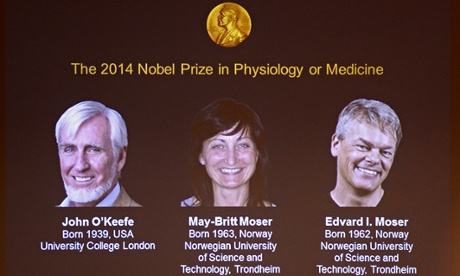
A trio of scientists has been awarded this year's Nobel Prize in Physiology or Medicine for their work related to nerve cells that create spatial maps in the brain to help us navigate through our environments.

Half of the Nobel Prize in Medicine goes to John O'Keefe, and the other half goes jointly to May-Britt Moser and her husband Edvard I. Moser "for their discoveries of cells that constitute a positioning system in the brain," according to an announcement by the Nobel Foundation in Stockholm today (Oct. 6).

In 1971, O'Keefe discovered the first component of the brain's "inner GPS" through experiments in rats. He found that a nerve cell, called a place cell, in the hippocampus became active when a rat was in a certain place, while other "place" nerve cells turned on when the rodent moved to other places. He realized these cells were building maps inside the brain's hippocampus of various places in the rat's environment.

Then in 2005, May-Britt Moser and Edvard I. Moser discovered so-called grid cells, or a type of nerve cell that help generate a coordinating system for navigation in a brain region near the hippocampus called the entorhinal cortex.

"Their subsequent research showed how place and grid cells make it possible to determine position and to navigate," according to a Nobel Foundation statement.

More recent work has found that place cells and grid cells are also in the human brain, and they may be involved in some types of memory loss in people with Alzheimer's disease.

O'Keefe, who was born in New York City, is currently the director of the Sainsbury Wellcome Center in Neural Circuits and Behavior at the University College London. The Mosers were both born in Norway. May-Britt is currently director of the Center for Neural Computation in Trondheim in Norway, while Edvard is the director of the Kavli Institute for Systems Neuroscience in Trondheim.

O'Keefe will receive half of this year's Nobel Prize amount of 8 million Swedish Krona (about $1.1 million), and the Mosers will share the other half of the money.


All three scientists awarded the prize have dramatically changed how we understand the brain’s navigation and memory systems. John O’Keefe made a remarkable discovery in 1971 when he found ‘place cells’ in a brain region called the hippocampus, which provide an organised map of space in their activity patterns.

O’Keefe speculated that place cells would need information akin to latitude and longitude in order to map space. Where this signal was located remained mysterious until 2005 when May-Britt and Edvard Moser discovered ‘grid cells’ in a brain region known as the medial entorhinal cortex. These cells show hexagonal patterns of activity stretching over the space traversed, similar to the lines that mark out distances on a globe.

 Grid cells and place cells offer one of the few bridges neuroscientists have linking the cellular level to the cognitive level, as they help explain how individual brain cells help us navigate, remember the past and imagine the future. The IgNobel prizewinning discovery that the hippocampus of London taxi drivers grows larger with experience would have likely been missed without such fundamental discoveries


Sunday, 5 October 2014

Simple Steps to crush Hunger and Lose Weight


Simple steps to crush hunger and lose weight

 
Want  a trimmer body and a more balanced mood? End that  gnawing sensation in your stomach with 10 simple solutions for feeling fuller and more gratified.

Enjoy the spice of life.

Top your omlet with hot sauce and splash sriracha on your stir – fry: though no frills foods might seem more saintly, flavour ful options-especially the spicy variety- are actually more gratifyingthan balnd ones,says Lawremce cheskin,M.D., director of the weight management center at johns Hopkins Bloomberg schoo of public Health. The concentrated burst of flavour may send a faster, more powerful satiety message to the brain,”

Have an Apple a Day.


Star your meal with an apple and research shows, you’re apt to eat less overall. The fruit’s filling fiber content (a medium one contains four to five grams, or roughly a fifth of  a woman’s daily needs) may  be partially to thank. Go with the actual solid fruit: In a study published in the journal appetite, people who sank their teeth into  an apple 15 mintues before a pasta meal cosumed 15 percent calories than those who had applesauce or apple’s or apple jucie instead. ”we think the apple’s volume, as well as the act of chewing, may result in a fuller stomach and a longer digestion time,”explains study co-author Julie Flood Obbagy. Ph.D,.,R.D

Learn What Full.

You might actually be full but not realize it. Most Americans don’t even know what satiety feels like, so  they keep eating says Chekin. Practiceaming for “three quarters full, says New York City dietitian Lauren Slayton ,R.D. And remember, the notion that your brain needs time to register fullness is true, says Cheskin:” Take 20 mintues to eat every meal and it’ll get easier to know when you should stop.”

Quick Faking it.

“if a client says she’s always hungry, the first thing I tell her is to cut out artificial sweetners, ”says Slayton. Research show that faux sugar’s intense sweetness makes you want dessert even more.(Basically, trying to trick your body backfires.) “your system knows it didn’t get the git of sugar it was expecting and will makeup for it with extra food, ”says  Slaytin. So if you’re currently trying to stall cravings with a sic pack –a-day diet soda habit or by tossing back dozens of sugar- free candies from your dest drawer, alittle bit of the real thing (say, a serving of fruit juice or a small cookie) may actually be the wier choice. After all, in a study from Louisiana State University Agricultural Center, people who had candy and treats (yep, with real sugar) in moderation were slimmer than those who abstained.

Stock Up on skinny fats.

Fats slows the rate at which your stomach and intensines digest food_ but when it comes to staving off snack attacks, not all fat is created equal. You might think the fat frim a juicy steak would be more substantial tham that of an avocado, but it’s actually the other way around, A study in showed that unsaturated fat- think nuts and vegetable oils- hits the spor better than saturated fat (most animal gat, found in meat and dairy). In another study, muffins made with canola oil were rated as more filling than those made with butter.

Ch-ch-ch-chia-fy your foods.


Those seeds that make chia pets grow could help you shrink. Slayton tells clients to add chia seeds to salads, soups, and smoothies, since they soak up water and swell during digestion. A hundred calries from almost any other food,” says Slayton. Steel- cut oats and ground flaxseed also expand during digestion, helping you stay sated.

Give In to These Munchies.


“ when you can’t get around the fact that you want to stuff your face, accept that you’re looking for volume- then choose foods that wont do too much caloric damage,” says psychologist Stephen Gullo,Ph.D., a foods strategist in New York City. Things you can demolish when necessary (and sometimes it just is ) include high- fiber GG Scandinavian bran crispbread, raw veggies, egg- white omelets, and upto  three cups of plain air – popped popcorn.

Multiply and Conquer.

Instead of a gaint sandwich, have half a small one, a side salad, a piece of fruit, and a cup of tea. Or pass up a big bowl of pasta in favour of a piece of sea food, sautéed veggies, and a few whole- wheat noodles on the side.” The meals with multiple lower- calories elements looks like more food, so you’re tricking your brain into being satisfied,” says Susan Roberts,Ph.D., a professor of nutrition at Tufts University and creator of MyIDiet.com

Sip a Bit of the Bubbly.

Carbonation expands the intestinal tract, which makes you feel as if you have a gut full of food,” explains Gullo (that’s not a license to xhug soda; sparkling water, unlike its artificially flavoured counterpart, hasn’t been tied to weight gain or other issues like tooth- enamel damage.) out on the town?  If booze isn’t a binge trigger for you, sip club soda with a splash of cran and vodka, or go for a glass of champagne.

Get a Dose of D.

When your vitamin D levels are low- and most women’s are- it has a negative impact in leptin, the hormone that tells you you’ve had enough food.( That may explain why studies have linked low D with obesity).” You can get it from fish like salmon, but it’s also smart to supplement with 1,000 IUs of D3 drops like Carlson or Bluebonnet brands,” says Salyton           

Saturday, 4 October 2014

What Bill Gates Says About Drug Companies


            What Bill Gates Says About Drug Companies

 
 His unique and thoughtful perspective on the pharmaceuticals industry.


Few outsiders have had as clear a view of the drug business as Gates. Over the past decade, Gates has relied on giants like Merck, Pfizer, and Sanofi-Aventis to provide the vaccines that are a lynchpin of his charitable work. He’s had a long-standing collaboration with GlaxoSmithKline over a malaria vaccine. The Bill & Melinda Gates Foundation recruited its last research head, Tachi Yamada, from Glaxo, where he had headed drug R&D. During his tenure, Yamada helped the Gates Foundation develop a meningitis vaccine from scratch to help people in parts of Africa. Yamada’s replacement, Trevor Mundel, hails from Novartis, where he ran clinical trials – a sign that some industry insiders say means that the Gates Foundation may be heading even further into the development of new vaccines and drugs.

After a conversation with Gates, one wonders if the drug industry has hurt itself by focusing too much on $100,000 cancer drugs and blockbuster pills that can be sold to millions, and not enough on products that are far more cost-effective. And then, of course, there’s the fact that the entire $600 billion pharmaceutical industry has spent the past decade in a research drought, getting comparatively few new medicines to market.

“Fortunately, our vaccine discovery rate has been better than the recent drug discovery rate of pharma,” Gates said. “And, you know, pharma doing well is important for the world, so hopefully their discovery rate will go up.”

Ten or fifteen years ago, nobody in the drug business would have held up vaccines as profit centers. That was the age of Pfizer‘s Viagra having the fastest drug launch in history, of the even bigger cholesterol-lowering medicine Lipitor becoming the best-selling drug in history and forcing Pfizer’s $116 billion buyout of partner Warner-Lambert, ushering in a new age of megamergers that experts believe may have squelched innovation in drug company labs.

Says Gates: “If you 15 years ago had said, ‘How important are vaccines to these various businesses?’ They would have said, “You know, our drug businesses are going to do so well. And vaccines are so tough, particularly because of liability issues.’”

But vaccines, Gates argues, “actually have more impact on health than all the new drugs.” And the pharmaceutical businesses didn’t do as well as expected. For Pfizer, for instance, a big bet on a Lipitor follow-up went down in flames when the drug turned out to increase, not decrease, the death rate. But now Pfizer is betting big on a vaccine, called Prevnar, against the pneumococcus bacteria. After Lipitor loses patent protection, Prevnar may well be the company’s top seller.

Gates thinks it is “ironic” that vaccines have done so well, along with AIDS drugs that have been a boon to companies like Gilead, one of the biggest biotechnology companies, and Merck, while heartburn medicines, cholesterol drugs, and antidepressants have failed to pay off.

When it comes to cancer drugs like Avastin and Erbitux, some of the biggest sales successes of the past decade, Gates seems unimpressed. “There’s always this divergence between what’s financially attractive and what has dramatic profit and the number of life years that you really save.” Take for instance, Novartis’ Gleevec, the crown jewel of targeted cancer drugs that can put chronic myelogenous leukemia and gastrointestinal stromal tumors into remission. “Do the math on that versus, says, preventing Parkinson’s or preventing Alzheimer’s. It’s in a different universe.”

The good news, to Gates’ mind, is that right now people are making money in the vaccine business. That means that more research is getting funded, and more innovation is happening.
“The rich world companies do more,” he says, “and that means the Chinese and Indian companies see that and they do more. You know, so it’s a pretty good virtuous cycle right now in terms of focus on vaccines. ”

Part of the drug industry’s problem, though, is that the process of inventing new drugs and vaccines has gotten more complex. Forty years ago, Leo Sternbach, a Roche scientist, could invent whole swaths of anti-anxiety drugs, and Merck vaccine researcher Maurice Hilleman, one of Gates’ heroes, could develop the bulk of the vaccines still given to children today.

“It’s like the breadth of software I got to do at Microsoft,” says Gates. “Things become more specialized and, you know, and more complex. So the idea that one guy does, like, ten different vaccines, including multiple iterations of them. And the combinations of them. He was on a roll. He got Merck into that. He figured out how it worked. He had the guts to go and try things.”

The sad reality: as innovation piles on innovation, doing something new and different only gets harder.


Thursday, 2 October 2014

Intrauterine devices


Intrauterine devices (IUDs) just got a big seal of approval, this time from the American Academy of Pediatrics, which recently endorsed them as an excellent method to prevent teenage pregnancy. Add to that the fact that it's also the most commonly used birth control among doctors themselves, and these little devices are sounding pretty great!

While there’s a wealth of common knowledge surrounding birth control options like the Pill and condoms, IUDs are a little more mysterious. “IUDs are a great birth control alternative for many women, from teenagers to those in their 50s,” says Julie Strickland, M.D., M.P.H., professor of obstetrics and gynecology at University of Missouri-Kansas City. Here’s why:


They’re Totally Safe

Since IUDs are internal, there’s some stigma surrounding their safety. Not necessary, according to Strickland. Early IUDs were associated with complications like fertility problems and pelvic infections, but those have been off the market since the 1960s. When IUDs were reintroduced, there were some stipulations about who was eligible for them, but those have since been lifted. “In the 1980s and beyond, the World Health Organization has loosened those restrictions because we understand IUDs much better. We screen patients very closely to decrease the risk of pelvic infections caused by IUDs, and we know they don’t affect fertility after you have them removed,” says Strickland.


There’s More Than One Option

The ParaGard, also known as the copper IUD, is hormone-free. It protects women from pregnancy for a whopping ten years. Mirena releases low doses of the hormone progesterone, and lasts for five years. The newest IUD on the market is Skyla, which is also hormonal. It offers an even lower dose or hormones, is good for three years, and is smaller, which is a plus for women who feel uncomfortable with a larger IUD. “The different kinds of IUDs make it easier to find something that is really the best option for the patient,” says Strickland.

Insertion Might Hurt a Little, But It’s Manageable

Although insertion is quick, it’s still technically a minor surgical procedure. The doctor uses a speculum to find your cervix, then dilates it and passes the IUD through the cervical canal, placing it inside the uterus. Most women will experience some cramping, akin to the ones during their periods, when the IUD is placed. “We usually ask women to take something like ibuprofen beforehand. In rare cases, we can give anesthesia similar to what you get if you go to the dentist, but in general we don’t need to. It really is a doable procedure,” says Strickland. There are also meds the doctor can prescribe that will soften your cervix and ideally make it easier to dilate, but studies are mixed on whether they’re effective.

You Can Get One Even If You Haven’t Had Kids

Remember those commercials who said IUDs were perfect for moms? Yeah, they're not the only ones it's perfect for. “There’s no IUD restriction based on age or on whether you’ve had children,” says Strickland. That said, it may be an easier procedure for women who have had kids because their cervical canal has stretched before during childbirth, making it more used to the dilation required to place an IUD. “However, my specialty is adolescents and we do administer IUDs to teenagers. In most of them, if they can tolerate the vaginal exam, they can tolerate the IUD just fine,” says Strickland. Plus, that's where the smaller new IUD comes in.


They’re Completely Reversible

“The IUD is only effective when it’s inside your body,” says Strickland. The IUD is shaped like a flexible T, which helps it conform to the shape of the uterus comfortably. When necessary, those wings can collapse for quick, easy removal. As soon as it’s out, your regular hormonal cycle begins to kick in again. If you have a non-hormonal IUD, you’ll return to normal fertility in about a month.

foods for ur brain


Can your diet make you smarter?


You bet. Research shows that what you eat is one of the most powerful influences on everyday brain skills, says Cynthia Green, PhD, founder and director of the Memory Enhancement Program at Mount Sinai School of Medicine in New York City and author of Brainpower Game Plan. Plus, the right foods may stave off Alzheimer’s and other forms of dementia. The key? Rounding out your meals with key nutrients that (along with exercise and daily brain games like these) keep brain cells healthy and prevent brain-damaging inflammation. “Your memory, attention span, and ability to learn will benefit from the healthful foods you choose,” says Green.

Fatty Fish
Seafood like salmon, albacore tuna, mackerel, and sardines are packed with omega-3 fatty acids, powerful and versatile nutrients that are essential for a healthy mind. About 40% of the fatty acids in brain cell membranes are DHA, one of the main omega-3 fatty acids in fish oil. Experts believe it’s probably necessary for transmitting signals between brain cells.
Researchers at Tufts University found that people who ate fish 3 times a week and had the highest levels of DHA in their blood slashed their risk of Alzheimer’s disease by 39%.

Eat it: At least twice a week (limit albacore tuna to no more than 6 ounces a week to minimize mercury exposure). Try these 7 delicious fish recipes.
Leafy Green and Cruciferous Veggies
Pile salads, stir-fries, and side dishes with broccoli, cauliflower, cabbage, kale, bok choy, and brussels sprouts. They’re filled with antioxidants like vitamin C and plant compounds called carotenoids, which are particularly powerful brain protectors.

Antioxidants prevent damage from free radicals, which are waste products your body makes when cells use fuel to create energy. Your brain is especially vulnerable to damage from free radicals because it uses a lot of fuel (it’s only about 3% of your body weight but uses up to 17% of your energy). Since your mind makes a lot of these toxic by-products, ample antioxidants help to disarm and defuse them.

While all antioxidants (from a variety of plants) are good for your brain, these cruciferous veggies are especially effective. A Harvard Medical School study of more than 13,000 women found that those who ate the most lowered their brain age by 1 to 2 years.

Eat it: Daily, as part of a well-rounded mix of other colorful veggies.
Avocado, Oils, Nuts, and Seeds
They all contain another important antioxidant: vitamin E. In one study, researchers found that people who consumed moderate amounts vitamin E—from food, not supplements—lowered their risk of AD by 67%.

Eat it: Frequently; shoot for 15 mg of E a day, the equivalent of 2 ounces of almonds.

Chocolate
Sweeten your brain-boosting diet with the dark kind (at least 70% cocoa); it contains flavonoids, another class of antioxidants that some research links to brain health. Other flavonoid-rich foods include apples, red and purple grapes, red wine, onions, tea, and beer.
Eat it: Frequently, as part of a healthy total calorie intake. Up to half an ounce daily has also been shown to lower blood pressure.

Curry
Go for Thai or Indian takeout; these cuisines often use the potent spice known to fight inflammation. Animal studies have shown that curry’s active ingredient, curcumin, actually clears away Alzheimer’s-causing proteins in the brain called amyloid plaques.

Eat it: As an ingredient in pasta sauces, salad dressings, or meat marinades. (Consider these tasty recipes that make Indian food easy to make.)

Berries
Research indicates these antioxidant powerhouses may protect your brain, although the mechanism isn’t fully understood. Some scientists think they help to build healthy connections between brain cells.

Eat them: Daily, added to yogurt, oatmeal, or cereal for breakfast or an afternoon snack.
Whole grains