Showing posts with label Medical Books. Show all posts

Sunday, 25 March 2018

Informed Consent Form brief introduction and its Template


Informed Consent Form Template

STUDY TITLE…

 ‘The research institution’s name … ‘ is (type of) organisation that carries out medical research. Research is different from normal treatment because research aims to find better ways of preventing and treating illness in the future for everybody’s benefit. We are asking your permission for you/your child to participate in a research study.

·         What is this research about?
You/ Your child has [XXX]/[XXX] is a common and serious illness in this area. In this research we aim to find out [explain basic research question e.g.] whether a new (drug/vaccine/intervention) will work as well and be as safe as the one currently recommended in  xxxx. In research so far, the new drug/vaccine/intervention [XXX] has been shown to work at least as well, and to be as safe, as the currently recommended one, [XXX] [or similar for vaccines/interventions]. Both are given by injection/tablet/XX.

In this research we will give [XXX] children/adults [explain selection e.g] who attend this clinic/live in this area the new drug/vaccine and [XXX] children/adults the normal drug/vaccine for [disease name]. We will find out if there is any difference between these drugs/vaccines by closely watching the progress of everyone in this study. The decision on which person/child gets which drug/vaccine will be decided by a system based on chance, not by any of the research team. [Where study is blind or explain if diifferent] To make sure the findings of this study are accurate, it is important that no one knows which person/child is receiving which drug/vaccine until the end of the research.

What will it involve for me/my child?
1.      [Where 1st sample taken is equivalent to standard care] We will use a small amount of the blood that has been/will be taken as part of your/your child’s normal treatment to find out if it is possible for you/them to participate in this research. This extra amount will be less than ½ tsp (2ml).
[Where 1st sample taken is not equivalent to standard care] We will take a small sample of blood from you/your child to find out why you/they are sick; [explain research reasons for this sample] how your/their body is reacting to XXX disease; and if it is possible for them to participate in this research. This sample will be less than half a tsp (2ml) and will be taken from your/your child’s arm.

2.      If you/your child fits the requirements of this research, we will give you/them either the new drug/vaccine [XXX] or the normal drug/vaccine [XXX]

3.      [Explain follow up procedures, including number, timing and place of follow up visits; type, amount and site of sample removal; and any other procedures] We will check/visit you/your child after xx days at this clinic/home to assess your/their progress. This will include taking another small sample of blood (less than half a teaspoon of blood) from your/your child’s arm.  Altogether we expect the trial to  have X visits for you/your child and take x months.

Are there any risks or disadvantages to me/my child of taking part?
[XXX] has been shown to be safe (if this is true so any known/frequently occurring adverse effects must be explained here) and to work in all the research already done in other places. However there is a very small chance that there may be a reaction we do not expect, but we will be monitoring your child very closely and it is considered to be unlikely. If we learn anything new about [XXX] during this study, we will tell you. If for any reason the doctors thinks you/your child should not be in the trial for you/their best interest then you/they will be taken out and given normal standard of care.

Are there any benefits to me/my child of taking part?
The benefits for you/your child taking part are that they/you get close observation during the trial and in taking part you/your child may help us improve the care of children/adults who have xxx  in the future. [Explain any other benefits such as treatment during follow up but explain terms of access to treatment and care]

You will be asked to bring your child back for follow up at this clinic [where relevant], but we will pay for the costs of your transport for this visit. Follow up visits will take some of your time. [Explain any other /costs/re-embursements]

What will happen if I don’t agree to participate?
All participation in research is voluntary. You are free to decide if you want/you want your child to take part or not. You/your child will still receive the recommended standard of care if you/they do not take part. If you do agree you can change your mind at any time and withdraw your child from the research. This will not affect your/their care now or in the future.

What happens to the samples?
[Explain reasons for export] Some of the tests that are needed as part of this research cannot be done in xxxx  at the moment, so part of the samples will be sent to laboratories abroad for these tests.  [Explain archiving] After the research has been done, a small portion of the blood/other samples will be stored. In the future, new research may be done on these samples about [XXX illness, or indicate if any illness]. Future research must first be approved by a national independent expert committee in Nairobi to ensure that participants’ safety and rights are respected. Individual names will be removed and replaced by codes, so that information cannot be linked to the participants.

Who will have access to information about me/my child in this research?
All our research records are stored securely in locked cabinets and password protected computers. Only a few people who are closely concerned with the research will be able to view information from participants.

Who has allowed this research to take place?
All research at XXX is approved by national independent expert committees in XXX and a committee in XXX to make sure the research is conducted properly and that participants’ safety and rights are respected.

What if I have any questions?
You may ask any of our staff questions at any time. You can also contact those who are responsible for the care of your child and this research:
Dr ………………………  contact details

This research is supported by the (name of sponsor) who will pay for any treatment or compensation in the unlikely event of any injury resulting from this trial.


Xxx (institution) Consent Form.

Study title


1.            I, (Or add ‘ being a guardian of’’)_________________________________ (name of child), have had the trial explained to me. I have understood all that has been read and had my questions answered satisfactorily. I understand that I change my mind at any stage and it will not affect the benefits due to me/my child.
ÿ please tick   I agree to ( allow my child to ) take part in this research
ÿ please tick  I agree to samples being stored
ÿ please tick  I agree to samples being exported

Parent/Guardian’s Signature:


Date:


Parent/Guardian’s Name:

Time:


(please print name)


2.            I certify that the above was explained verbally to the parent/guardian by _______________________________ (Name of person taking consent), and that s/he understands the nature and the purpose of the study and consents to the participation of the child in the study. S/he has been given opportunity to ask questions which have been answered satisfactorily.

Investigator’s Signature:
Or Designee

Date:


Name:

Time:


(please print name)


Only necessary if the Participant / Parent/Guardian cannot read:

3.    I* attest that the information in this consent form was accurately explained to, and apparently understood by, the parent/guardian, and that informed consent was freely given by the parent /guardian
Witness’ Signature:

Date:


Witness’ Name:

Time:


(please print name)

*The witness should be independent from trial or a member of staff who was not involved in gaining the consent.

Thumbprint of the parent as named above if they cannot write: ______________________
­­­­­­­­­­­­­­­THE PARENT/GUARDIAN SHOULD NOW BE GIVEN A SIGNED COPY TO KEEP


Take time to understand

A recent survey of 672 study volunteers offers insight into the informed consent process and whether or not it is working to help volunteers understand their roles and responsibilities. Some key takeaways from the study are:
  • Nearly 98% of volunteers said they received the informed consent form and 90% said they read the form completely.
  • The vast majority of volunteers said they understood the expectations of the study, including additional risks and their ability to withdraw at any time.
  • More than three-quarters understood that they could contact someone outside the study if they had additional questions about their rights during the trial.
  • More than half the volunteers were unaware that neither their doctor nor they would know what medication they would receive during the study; more than two-thirds understood that they could receive a placebo in the trial.
  • Nine out of 10 volunteers said that the information received prior to the trial matched their actual experience during the trial.
  • Approximately 75% of the volunteers indicated that the main reason for participating in a study was to help themselves or others and to advance science.
Research studies are very involved so it is important to learn as much as possible about the study you may participate in before you consent. The U.S. Food and Drug Administration (FDA) guidelines state that study volunteers should understand the risks they're taking, which may mean spending additional time with the research staff to make sure you get the information you need. If you want to know details, such as any documented side effects of a particular drug observed in earlier clinical trials, you must ask for that information as well as any other information you may want to know.
The decision to participate in a clinical trial is a personal one and one that you are entitled to make freely, without influence or coercion. Being properly informed so that you fully understand the responsibilities of becoming a study volunteer is the best way to ensure that you are making the right decision for you.

Saturday, 12 November 2016

Novel Drug Delivery Systems Yie Chien


A comprehensive treatment of the science, technology, and regulation of rate-controlled administration

 of therapeutic agents, with coverage of the basic concepts, fundamental principles, biomedical 

rationales, and potential applications. This revised and updated edition (first in 1982) incorporates


                                                      click me


Monday, 7 November 2016

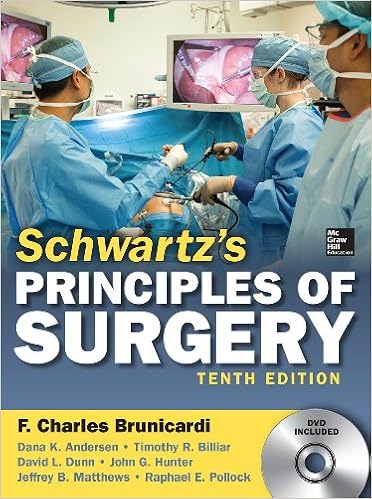
Schwartz's Principles of Surgery

THE WORLD'S #1 SURGERY TEXT--UPDATED TO INCLUDE STATE-OF-THE-ART EVIDENCE-BASED SURGICAL CARE AND LEADERSHIP GUIDANCE FOR TRAINEES AND PRACTICING SURGEONS

A Doody's Core Title for 2015!
The Tenth Edition of Schwartz's Principles of Surgery maintains the book's unmatched coverageof the foundations of surgery while bringing into sharper focus new and emerging technologies. We have entered a new era of surgery in which minimally invasive surgery, robotic surgery, and the use of computers and genomic information have improved the outcomes and quality of life for patients. With these advances in mind, all chapters have been updated with an emphasis on evidence-based, state-of-the-art surgical care. An exciting new chapter, "Fundamental Principles of Leadership Training in Surgery," expands the scope of the book beyond the operating room to encompass the actual development of surgeons. This edition is also enriched by an increased number of international chapter authors and a new chapter on Global Surgery. More than ever, Schwartz's Principles of Surgery is international in scope--a compendium of the knowledge and technique of the world's leading surgeons.
Features
  • More clinically relevant than ever, with emphasis on high-yield discussion of diagnosis and treatment of surgical disease, arranged by organ system and surgical specialty
  • Content is supported by boxed key points, detailed anatomical figures, diagnostic and management algorithms, and key references
  • Beautiful full-color design
  • New companion DVD includes eight high-quality, narrated videos:
    • Laparoscopic Inguinal Hernia Repair
    • Kidney Transplant
    • Laparoscopic Cholecystectomy
    • Thyroidectomy
    • Right Colectomy
    • Sigmoid Colectomy
    • Laparoscopic Incisional Hernia Repair
    • Open Posterior Component Separation


                                                      click me

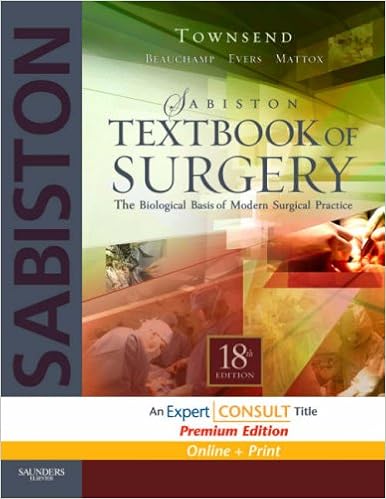
Sabiston Textbook of Surgery: The Biological Basis of Modern Surgical Practice, 18th Edition

This distinguished reference carries on a 70-year legacy as the world's most thorough, useful, readable, and understandable text on the principles and techniques of surgery. Its peerless contributors deliver all the well-rounded, state-of-the-art knowledge you need to richly grasp the pathophysiology and optimal management of every surgical condition―so you can make the best clinical decisions, avoid complications, manage unusual situations, and achieve the best possible outcomes. It is a valuable review tool for certification/recertification preparation, and an indispensable source of guidance on overcoming the challenges that arise in everyday practice. As an Expert Consult title, the thoroughly updated 18th edition comes with access to the complete contents online, fully searchable―enabling you to consult it rapidly from any computer with an Internet connection. In addition, this Premium Edition includes timely clinical updates online, plus links to MEDLINE, downloadable illustrations, bonus journal articles, review questions, and much more.
  • Offers a more distinguished team of contributors and a better blend of clinical and basic-science information than any other source, providing you with the best possible understanding of the clinical issues surrounding every operative situation.
  • Features a more user-friendly format, a larger and more helpful array of full-color illustrations, and a more versatile and well-constructed web site than other resources―making the answers that you need easier to locate and understand quickly.
  • Offers an organization and content that parallels the written board American Board of Surgery exam, providing excellent preparation for certification and recertification.
  • Includes access to the complete contents online, fully searchable, PLUS timely updates to reflect new scientific and clinical developments · references linked to MEDLINE · downloadable illustrations · bonus articles from important surgery periodicals (such as Surgical Clinics of North America, the American Journal of Surgery, Operative Techniques in General Surgery, and Seminars in Colon and Rectal Surgery) · review questions · and other valuable features.
  • Incorporates an enhanced emphasis on surgical outcomes to mirror the growing importance of this topic.
  • Delivers comprehensive updates to keep you current with the latest research, techniques, and emerging procedures in the field, as well as completely new chapters on "Surgical Patient Safety" and "Regenerative Medicine."


                                                         click me

Oxford Textbook of Surgery

The Oxford Textbook of Surgery, 2nd Edition provides a comprehensive reference on all aspects of 

general surgery, and includes substantial sections on the subspecialties such as orthopedics, pediatric

 surgery, neurosurgery, and cardiac surgery. It has been designed for specialist and trainee surgeons 

working in any part of the world. The uniques, full-color design of the Textbook has been enhanced for 

this edition. There are major new sections on, for example, molecular biology and evidence-based 

surgery. Other key sections, written by world authorities, include those on endoscopic surgery, surgical 

nutrition, response to injury, the design and interpretation of clinical trials, causes of cancer, vascular 

surgery and the selection of surgical trainees. Almost every other section has been rewritten by a new 

contributor or heavily revised to reflect new developments and emphases in the field. Like 

other Oxford Textbooks there is an emphasis on the 'humane' approach with chapters on counseling 

bereaved relatives, pain relief and the care of the dying. An international faculty combine to make this 

unique contribution to the field.


                                                        click me

Mastery of Surgery: 5th (Fifth) Edition


                                                                click me

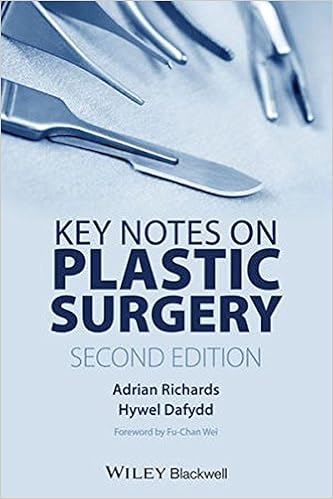
Key Notes on Plastic Surgery

This is the new edition of the concise but comprehensive handbook that should be owned by all surgical trainees specialising in plastic surgery. Taking a pithy systematic approach, Key Notes on Plastic Surgery offers the latest developments within the field in bullet point form and includes key papers for viva voces. It is informed by the current FRCS (Plast) curriculum, making it ideal preparation for the UK exit examination or equivalent international board exam.

Key features
  • Fully covers the entire scope of plastic surgery
  • Clearly divided into 10 sections with logical subheadings for easy fact-finding
  • Acts as an adjunct to the established longer texts
  • Brand new chapter on ethics and the law – a compulsory component of the oral examination
  • Illustrations outlining key surgical procedures and relevant anatomy

Fully revised to include all the latest clinical guidelines, Key Notes on Plastic Surgery is the perfect rapid reference tool for trainees in plastic surgery and dermatologic surgery who require quick, accurate answers


                                                                Click Me

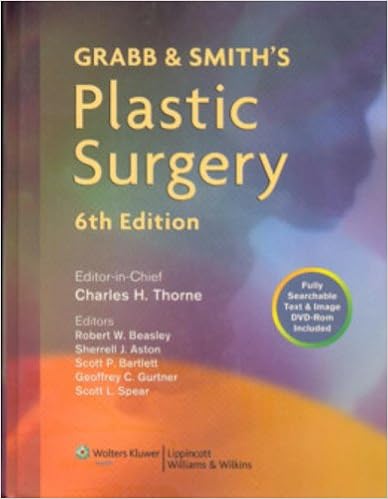
Grabb and Smith's Plastic Surgery (GRABB'S PLASTIC SURGERY)

Thoroughly revised for its Sixth Edition, Grabb and Smith's Plastic Surgery is the only comprehensive single-volume reference on the full range of aesthetic and reconstructive procedures in plastic surgery. Featuring more than 1,900 photographs and line drawings, this world-renowned reference guides you through virtually every aesthetic and reconstructive surgical challenge, including implants; craniosynostosis syndromes; rhinoplasty; soft tissue and skeletal injuries; tendon transfer; wound care; and more.
This edition features the latest clinical recommendations and procedures, including breast prosthetics, tissue expansion, flexor tendon surgery, reconstruction of the auricle and otoplasty, correction of ptosis and canthoplasty, face lifts, and more.
A bonus DVD-ROM with full text and color images from the book gives you fast, convenient access to surgical procedures and guides you through new, recommended endoscopic techniques, laser procedures, and microsurgery options.


                                                           click me

Essential Practice of Surgery: Basic Science and Clinical Evidence

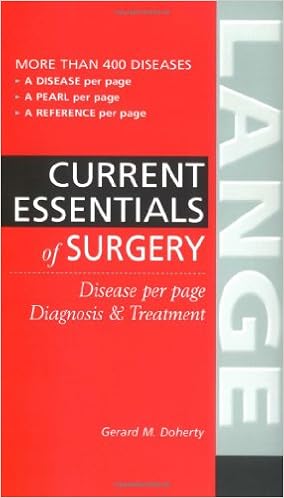
Current Essentials of Surgery

Essential coverage of surgery!

 In the popular one-disorder-per-page format, this pocket guide features bulleted, high-yield information on over 400 common surgical diagnoses. With key equations and formulae, a clinical pearl per page, plus references, this book truly is essential in critical care


                                                           Click Me

Thursday, 3 November 2016

The Protein Protocols Handbook (Methods in Molecular Biology)

This greatly enhanced second edition introduces 60 critically important new chapters dealing with topics and techniques that have emerged since the first edition, as well as significantly updating the remaining articles. The new chapters cover many rapidly developing areas, particularly the application of mass spectrometry in protein characterization, as well as the now well-established 2-D PAGE technique in proteomics. The section on glycoprotein analysis has also been significantly expanded, and methods for the production of single-chain and phage-displayed antibodies have been added to the section on antibodies. Each readily reproducible method follows the highly praised format of the Methods in Molecular Biology™ series, offering a concise summary of its basic theory, a complete materials list, a step-by-step protocol for its successful execution, and extensive notes on avoiding pitfalls and on modifying the method to function within your own experimental circumstances.


                                                        Click Me

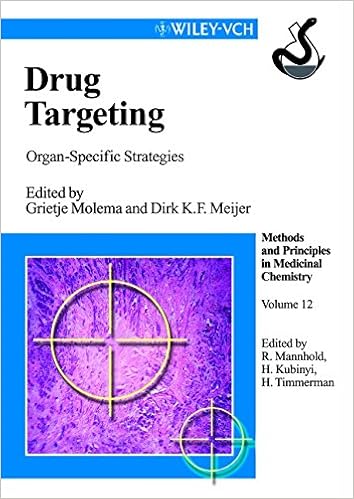
Drug Targeting Organ-Specific Strategies Hardcover – January 15, 2001 by Grietje Molema (


How are medicines transported intact through the body to their specific target sites without triggering side effects? The answer is "Drug Targeting".
This thoroughly application-oriented book gives comprehensive answers to this and many other questions that confront scientists daily in chemical, pharmaceutical and medical research. A concise overview of the most important basic theories, modern forms of therapy and molecular biological tools, it represents a comprehensible introduction to the topic. The book then goes on to deal with strategies for target applications, divided according to target site, for example brain, lungs, liver, blood vessels and tumor cells. The third part is devoted to special, modern techniques, from phage display methods, via the use of tissue slices right up to pharmacokinetic modeling. Throughout, the focus remains on the practical aspect and successful application of the method in question, although a glance at what the future holds is also included. A volume that every pharmaceutically oriented research group should own


                                                              Click Me

Drug Delivery Systems (Methods in Molecular Biology)

In this concise and systematic book, a team of experts select the most important, cutting-edge technologies used in drug delivery systems. They take into account significant drugs, new technologies such as nanoparticles, and therapeutic applications. The chapters present step-by-step laboratory protocols following the highly successful Methods in Molecular Biology™ series format, offering readily reproducible results vital for pharmaceutical physicians and scientists.


                                                              Click Me

Drug Delivery: Principles and Applications

An indispensable tool for those working at the front lines of new drug development
Written for busy professionals at the forefront of new drug development, Drug Delivery gets readers quickly up to speed on both the principles and latest applications in the increasingly important field of drug delivery.
Recent developments in such areas as combinatorial chemistry, proteomics, and genomics have revolutionized researchers' ability to rapidly identify and synthesize new pharmacological compounds. However, delivery-related properties remain a significant reason for clinical trial failures.
Bringing together contributions by leading international experts, Drug Delivery covers the entire field in a systematic but concise way. It begins with an in-depth review of key fundamentals, such as physiochemical and biological barriers; drug delivery pathways; metabolism; drug formulation; pharmacokinetic and pharmacodynamic issues; and more. The remainder of the book is devoted to the systematic examination-including overviews, timely examples, and extensive references-of a host of specific subjects, including:
* Receptor-mediated drug delivery
* Prodrug delivery approaches
* Oral protein and peptide drug delivery
* Gene therapy and gene delivery
* Ultrasound-mediated drug delivery
* Polycationic peptides and proteins in drug delivery
* Pulmonary drug delivery
* Antibody-directed drug delivery
* Efflux transporters in drug excretion
* Intellectual property issues in drug delivery


                                                     Click Me

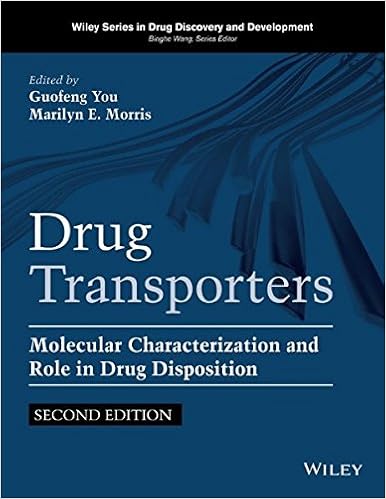
Drug Transporters: Molecular Characterization and Role in Drug Disposition (Wiley Series in Drug Discovery and Development)

This new edition overviews drug transporters and presents the principles of drug transport and associated techniques, featuring new chapters on multidrug and toxin extrusion proteins, placental transport,  in silico approaches in drug discovery, and regulatory guidance for drug transport studies in drug development.
• Describes drug transporter families, mechanisms, and clinical implications along with experimental methods for studying and characterizing drug transporters
• Includes new chapters on multidrug and toxin extrusion proteins, placental transport and in silico approaches in drug discovery
• Has a new chapter covering regulatory guidance for the evaluation of drug transport in drug development with global criteria used for drug transporters in clinical trials
• Arranges material to go from fundamental mechanisms to clinical outcomes, making the book useful for novice and expert readers

                                                      
                                                               Click Here